
Today’s Messenger is a basic introduction to the difference between socialism and capitalism. Socialist ideas seem to be on the rise in the U.S., increasingly appealing to younger generations as both an economic and moral solution. What are universities teaching today? Despite the proven economic benefits of capitalism, socialism is being touted as more virtuous and fair. However, American socialists like Sen. Bernie Sanders, I-Vt., Alexandria Ocasio-Cortez, and Zohran Mamdani completely overlook the misery socialism has wrought.
The historical record reveals that everywhere socialism has been tried, it destroys lives and societies. Over the last 100 years, more than two doz en countries have attempted to implement socialisteconomies; they are countries such as the Soviet Union, Cuba, and North Korea, Yugoslavia, Albania, Poland, Vietnam, Bulgaria, Romania, Venezuela, Somalia, Ethiopia, Cambodia, and many others. Why aren’t people flocking to these countries instead of to the U.S.? Countries in nearly every continent, with varying histories, climates, cultures, languages, and traditions, have tried socialism—and consistently failed. In every case, the economies declined or collapsed, suffered reductions in prosperity and yielded growing poverty, and in most cases, eventually abandoned the attempts. Of course, the depressing results were unfortunately not just in declining wealth: some 100 million innocent people have been killed by their own governments in the name of socialist and Marxist ideals.
Simply put, a socialist economy involves state ownership and cooperatives as opposed to individual ownership. It’s a top-down rather than a bottom-up economic approach, where production, distribution, and exchange are managed by socialist controllers rather than by private individuals, with the hope of reducing economic inequality. Sounds good in theory. But socialism faces insurmountable challenges such as incentives for productivity and balancing individual freedoms with collective control.
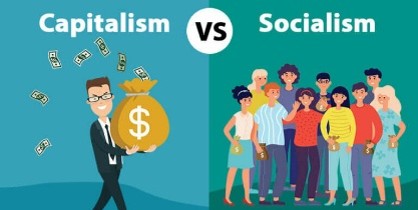 By contrast, a capitalist economy is competition-based and allows individuals to engage in trade and transactions according to their own desires and values. Capitalism rewards hard work and creativity and historically has been the most productive and prosperous of all economic models.
In a socialist country, most of the capital created by workers is controlled by the government, not by those who toiled to create it. So, the incentive dilemma is obvious: If what you earn is going to be spent by a centralized government rather than by you, why bother to earn it in the first place?
In a family setting, socialism might look like this: A parent has two sons and tells them he will pay them ten dollars if they clean their room. One son works hard to clean the shared room while the other son does nothing. At the end of the day, the parent pays the son who got the job done ten dollars, but out of “fairness and equality” promptly takes away five dollars of it and gives it to the lazy son who did nothing. That is a representation of socialism!
Which model do you prefer? Self-governance of your own earned resources, or letting others decide how your resources should be spent?
Join the Conversation
We would love to hear from our readers and want to encourage positive interaction. Comments can
provide valuable feedback and encouragement to our writers, and this helps foster a sense of community. (Read our Comment Policy)
