
This month’s Messenger is considering various worldview topics and how the church might respond. The topic we are considering today is in vitro fertilization. The issue of in vitro fertilization, IVF, is very much in the news because of a new executive order to expand access and to reduce the cost of in vitro fertilization. IVF is a type of assisted reproductive technology where sperm and an egg are fertilized outside of the human body.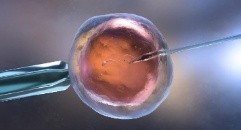
From a biblical worldview, having children is a good thing. The church should empathize with the deep longing to have a baby by couples who struggle with infertility. However, a problem arises when IVF is performed outside of a biblically-defined marriage. If the IVF context is a married Christian couple using their own sperm and egg (gametes), that is one thing. But if it is a single person, or an unmarried couple, a homosexual couple or transgender couple, that’s another thing as far as Scripture is concerned. For many people, IVF is the only option because they are not in a biblical-defined marriage. There are growing numbers of people making use of this technology and having children outside of biblical boundaries. And the church must address this as sin!
Further, because the Biblical worldview holds that a fertilized egg is a living human, there are moral implications to consider. More eggs are usually harvested than are actually needed, so unused frozen embryos may end up being destroyed. The Bible does not give us permission to destroy innocent human life.
Then there is the issue of commercialization of surrogate reproductive cells. Potential IVF users could ask questions like, “What type of genes do I want for my child?” Websites that allow one to review at reproductive cells for sale, where they are graded by quality and marked by specific genetic markers; hair color, eye color, anticipated athletic ability as judged by the donor, such businesses are engaging in eugenics. The church must never condone the marketing of human cells or selective gene manipulation merely to seek desirable traits.
What might be the church’s response to in vitro fertilization? First, the church should offer empathy and comfort to those within marriage who are struggling to have children. At the same time, the church must balance the sanctity and dignity of human life while teaching biblical ways to avoid moral abuses.
A closing thought. Every human being is made in God’s image. The baby is not responsible for process, so each baby is to be received, cherished, and welcomed as a miracle of God. When the church is silent, the ungodly world will speak in her place.
Pr. Ray Ballmann
Glen Rose, Texas
Join the Conversation
We would love to hear from our readers and want to encourage positive interaction. Comments can
provide valuable feedback and encouragement to our writers, and this helps foster a sense of community. (Read our Comment Policy)

Another fitting message in a world of confusion. Following the counsel of God’s Word and patiently waiting on Him is the only way to experience peace in every matter of life.