
This month we have been looking at the Primary election cycle. Today we are examining the difference between a Primary election and a Caucus. They are two different methods of selecting candidates for political office. While both serve the purpose of choosing a party’s candidate for a general election, they differ in process and participation.
In a Primary election, registered voters cast secret ballots at designated polling stations overseen by election officials. Voters choose their preferred candidate, usually without any open discussions or debates. The Primary election is a more common, resembling the general election process, and allows for a wide range of voters to participate. 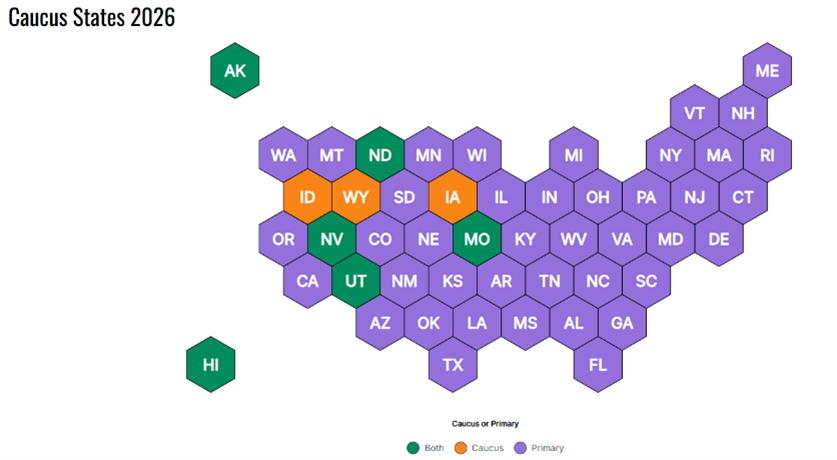
A Caucus, on the other hand, is an open, collaborative and interactive process. Party members gather at designated locations, like schools, community centers, or private homes. Instead of casting a ballot, participants engage in open discussions, speeches, and debates about the candidates. This gives the opportunity to persuade others to support their preferred candidate and form groups or factions based on their choices. At the end of the Caucus, the number of supporters each candidate has determines the final results.
Three states have Caucuses—Idaho, Wyoming and Iowa, with another six states offer both Primaries and Caucuses—Alaska, Hawaii, Nevada, Utah, North Dakota, and Missouri.
Caucuses require a higher level of involvement from participants than do Primary elections. Participants need to be present at specific locations and actively participate in the discussions, making it a more engaging event. Caucuses can foster political awareness, encourage grassroots organizing, and build a sense of community among party members, but they also require time, commitment, and active engagement in the political process.
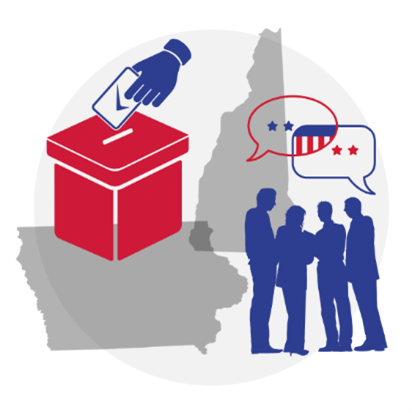 Primary elections provide a more convenient and accessible voting method, while Caucuses offer a platform for voters to engage in direct conversations about the candidates. Over the years, there has been a shift towards Primary elections. However, Caucus states do allow for more in-depth discussions of the candidates.
Now that you know the difference between a Primary and a Caucus, hopefully you can understand the process a little better. The strength of a Caucus is that one group can be swayed in a particular way, especially if many people agree. However, it does not work as well in large or high population areas where there is a vast difference of opinion among the registered voters.
No matter which voting method your state has, you are encouraged to view your candidate choices and learn something about them at https://ivoterguide.com/ BEFORE you vote. Committed Christians should vote for candidates that best reflect Biblical values!
Join the Conversation
We would love to hear from our readers and want to encourage positive interaction. Comments can
provide valuable feedback and encouragement to our writers, and this helps foster a sense of community. (Read our Comment Policy)
