
Today we conclude our series on the Bill of Rights by looking at a final amendment and how it applies to our liberties; specifically, the Tenth Amendment.
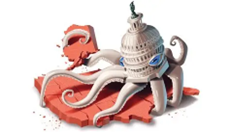 Imagine a substantial expansion of federal power. To be more specific, the federal government begins asserting authority over areas traditionally managed by states, such as education, healthcare, and local law enforcement. You’re stunned as the federal government establishes a national curriculum for all public schools. You also see the scope of federal power broadening to the point of setting specific industry regulations, managing state-controlled public health and safety concerns, creating inheritance laws, establishing local zoning ordinances, telling local police what they can and can’t do, and overriding various state and local laws. Ultimately, you watch the federal government legislate on virtually all state matters, transforming its federal role from one of limited, enumerated powers to a sole legislative authority.
 The loss of state power is not the only casualty from an all-powerful central government; it would also affect our daily lives and freedoms as federal laws impact property ownership, where you as a citizen are able to live, affecting your personal conduct and choices, and exerting control over diverse aspects of your daily life.
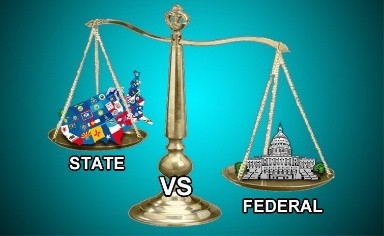
To guard against that scenario, the founding fathers gave us the Tenth Amendment to explicitly reserve powers not delegated to the federal government to the states or the people. The Tenth Amendment makes clear that the federal government possesses only those powers specifically granted or enumerated to it by the Constitution, ensuring a division of authority between national and state levels. The Tenth Amendment protects state sovereignty and acts as a safeguard against federal overreach. Perhaps that is why Thomas Jefferson called the Tenth Amendment the “foundation” of the Constitution.
Some of the Enumerated powers of the federal government are the right to:
- Declare war
- Print currency and mint coinage
- Issue regulations for trade carried out between the states
- Regulate commerce with foreign nations
- Control the granting of patents
- Levy Taxes
Reserved powers given to individual states include:
- Calling and holding elections
- Organizing police for protection of its citizens
- Issuing licenses for a range of things: marriage, driving, hunting and fishing
- Implement welfare programs
- Set speed limits
May we see the great wisdom of Bill of Rights given to us by our founders and for a great God who has helped us preserve these unique government curbs and save individual freedoms.
Pr. Ray Ballmann
Glen Rose, Texas
Join the Conversation
We would love to hear from our readers and want to encourage positive interaction. Comments can
provide valuable feedback and encouragement to our writers, and this helps foster a sense of community. (Read our Comment Policy)
